The secrets behind confidence: what we often misunderstand
If you had all the confidence in the world, how would you behave differently? What kind of person or leader would you be and what sort of things would you do?
Maybe you would feel more emboldened to take risks and embrace opportunities that stretch you, speak up at important moments, navigate tricky situations with more flair or simply enjoy experiencing less anxiety and self-doubt. Life often looks easier for the people who we perceive to have loads of confidence.
Yet, a YouGov study suggests that as many as a third (34%) of Britons don’t feel confident about their personality. This self-doubt is often fuelled by internal narratives - I’m not enough; others are better than me at this; I don’t know as much as they think I do - circling around until they drown out everything else.
Left unchecked, these thoughts shape how we feel and behave. To ease the anxiety and convince ourselves that our ideas are worthy, we may seek reassurance from others. Or we overcompensate by working longer hours, chasing approval and trying to control every outcome - all to hide the uncertainty, especially when others expect us to be confident.
So, what exactly is confidence and what’s the secret to getting more of it?
What is confidence?
In his book, The Confidence Gap, Dr Russ Harris outlines two definitions:
- A feeling of certainty or assurance.
- An act of trust or reliance.
The first reflects a powerful belief that you will perform well and achieve a positive outcome, without fear, anxiety or negative thoughts about failure.
The second, used far less commonly, describes not a feeling but an act. It’s derived from the Latin words com meaning “with” and fidere meaning “to trust”. In contrast to the first definition, when we trust or rely on ourselves or others, we often don’t have feelings of absolute certainty or assurance, particularly when there’s a lot on the line.
The way we think about confidence matters as it impacts the stories we tell ourselves about it. But before exploring how to build more confidence, it’s helpful to understand what influences it.
What influences confidence?
Personality plays its part. People who score highly on the personality scale called emotional stability tend to be calmer, more secure and less prone to anxiety and self-doubt. Additionally, those who are higher on extraversion tend to feel more comfortable being in groups, enjoy attention and are often seen as assertive and energetic.
Interacting with our personality disposition are life events that can dial up or down our base levels of confidence - like our upbringing, relationships, successes and experiences of adversity. But studies suggest that’s not the whole story.
According to Prof Ian Robertson, a clinical psychologist and founding director of the Trinity College Institute of Neuroscience in Dublin, “You normally can’t see inside the heads of people who seem effortlessly confident. But they’re acting more confident than they actually feel. Confidence is not about feeling certain that our actions will achieve our desired outcome. There will always be some uncertainty. Instead, confidence is about effectively coping with the anxiety that this uncertainty produces.”
From this perspective, confidence is not simply a fixed trait but, instead, is a way of thinking and behaving that can be learned.
How can I build confidence?
Whether it’s wanting to feel more self-assured leading meetings, making a pitch or taking on a challenging project, there are a number of steps we can take to help build confidence.
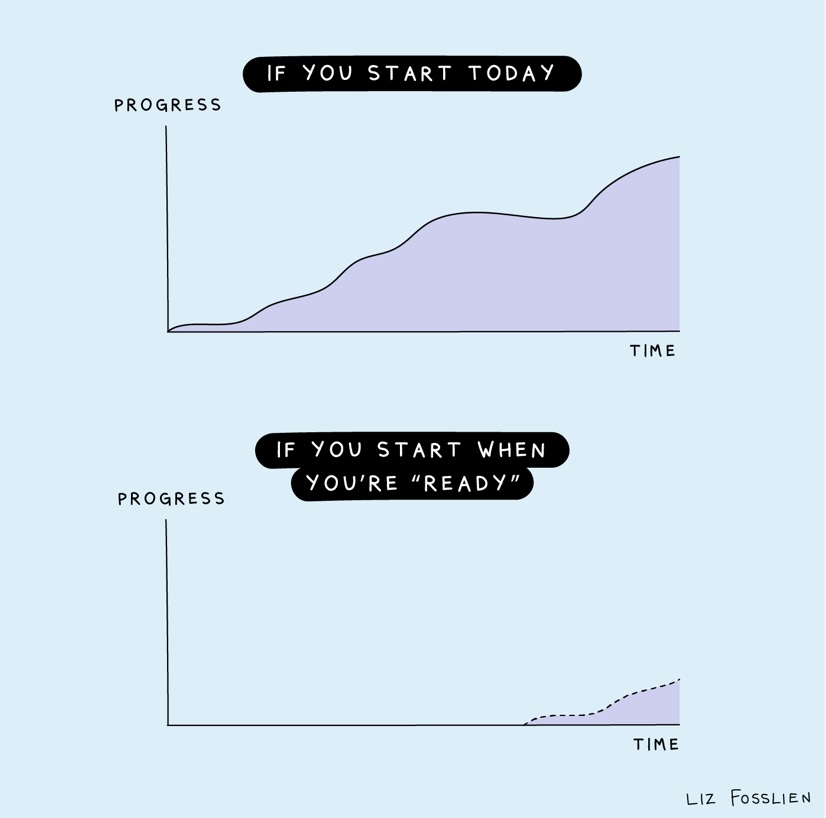
Importantly, it starts with understanding that the action of confidence comes first; the feeling follows. Don’t wait until you feel confident to speak up or act, otherwise you’re likely to be stuck waiting.
People who act confidently aren’t immune from anxiety, they just don’t let it get in the way of what matters.
When we experience unhelpful thoughts like “I’m not good enough”, the thoughts themselves aren’t the problem - it’s how we relate to them. Being more flexible in our response gives us greater choice about how we act, rather than being driven by those thoughts.
Here’s how to practise:
- Accept the uncertainty. There will always be some discomfort when we’re stretching ourselves. It’s normal to experience self-doubt, anxiety or other challenging thoughts. Allow these experiences to exist without trying to wrestle with them or eliminate them. It’s the difference between thinking “I need to feel confident before I speak up” and “I can feel anxious and still speak up”.
- Notice unhelpful thoughts without buying into them. Thoughts are simply narratives that our brain constructs, influenced by our past experiences, current emotions and future fears. They’re not objective truths. When we learn to notice our thoughts, we can step back and observe them rather than being consumed by them. Instead of saying to yourself, “I’m going to embarrass myself”, try “I’m having the thought that I’m going to embarrass myself”. This simple shift creates some distance, giving us more space to choose how to respond. You might imagine your thoughts as leaves floating down a stream or clouds passing in the sky - something to notice, not rules or instructions you must obey.
- Take a small action that aligns with your values. Confidence is built through repeated action. Each time you take a step towards something that matters, despite the discomfort, you strengthen the belief that you can handle it. If you value contribution or growth, for example, you might ask a question in a meeting or ask for feedback on something you’ve been working on. Over time, these behaviours will feel more natural and comfortable.
- Treat these acts as behavioural experiments. Think gradual exposure and incremental steps. Rather than judging each attempt as a success or failure, get curious about what happens and what you learn. Celebrate progress and small wins. Congratulate yourself for stepping out of your comfort zone before moving onto the next thing. Of course, things won’t always go smoothly and there will be bumps along the way, which is exactly where the learning happens.
- Adopt a challenge mindset. Focus on what you could potentially gain from taking action rather than what you might lose. Instead of dwelling on everything that could go wrong, spend time visualising yourself handling the situation effectively - whether that’s leading a meeting, sharing your opinion or having a difficult conversation. Research suggests that mental rehearsal activates many of the same neural pathways as real experience, helping you feel more prepared and increasing your sense of confidence.
- Use the energy. Butterflies in the stomach, a racing heart and shallow breathing can signal anxiety in one context and excitement or readiness in another. It’s the same physiological response. The way we interpret the signals impacts the emotions we experience. Channel the hyper alertness and energy to focus.
- Be gentle with yourself. Overthinking after the event can trigger the release of noradrenaline - the fight or flight chemical - and the more you stress the more you overthink, creating a vicious circle. It’s highly likely that you will be judging yourself more harshly than others, so give yourself some grace and the same understanding you’d offer a colleague in a similar situation.
It’s tempting to wish we could take a pill or wave a magic wand to remove self-doubt and create more confidence, but genuine confidence is not the absence of fear - it’s a different relationship with it.
The next time self-doubt shows up, try pausing and asking yourself:
- What am I doing to avoid discomfort and gain short-term relief?
- If I let this thought dictate my actions, will it help me be the person I want to be?
- What values do I want to act by in this situation?
Taking regular steps towards what matters to you, despite the unhelpful thoughts and feelings, signals to your brain that you can tolerate the discomfort and come through the other side. Through taking action, we gain the feeling of confidence.
The Confidence Gap: From Fear to Freedom by Dr Russ Harris