Imposter syndrome in marketing: how to manage it without faking confidence
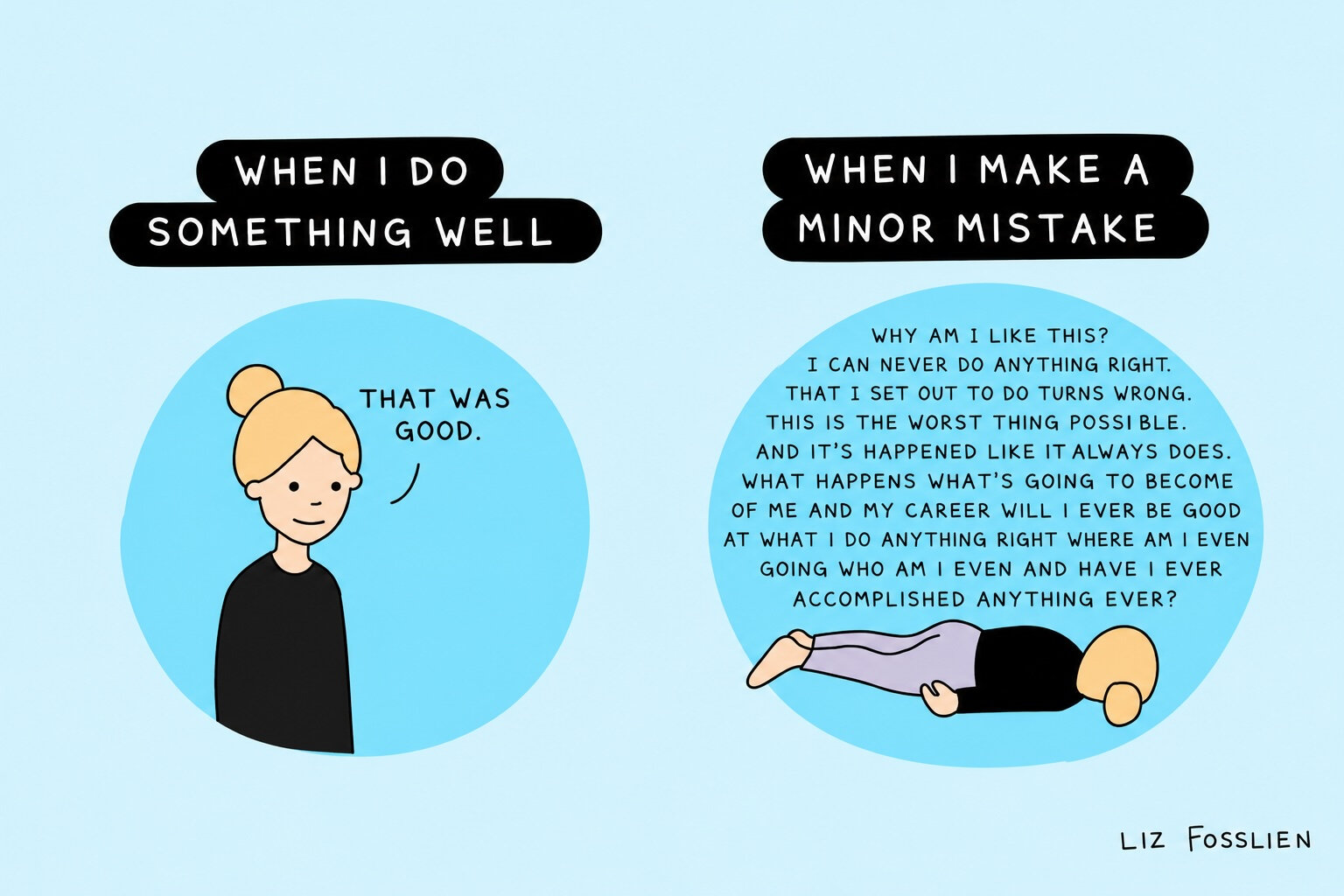
Before retraining as a psychologist, I worked in marketing communications. I loved the constant people interaction, fast-paced environment and the way it was all-hands-on deck when an emergency hit (I worked for a catastrophe risk management company!).
A challenge of working in marketing, however, is that everyone has a view on how it should be done. This is generally well-intentioned – trying to get the best result for the company or client – but it requires solid diplomacy and self-confidence to navigate the diversity of opinions and ideas, especially when they’re coming from the most senior leaders.
Marketing is also high-profile and subject to scrutiny. Thousands of people internally and externally receive the communications you’ve crafted, which is catnip for perfectionism. I would double, triple and quadruple check announcements before they were sent. The risk of having to send out a correction, and facing the indignity of admitting to everyone that I’d messed up, was an underlying fear that kept me on high alert.
Added to this was the pressure to convince highly discerning editors that the company had a compelling story to report and to get into the press for the right reasons and stay out of it for any wrong ones. These features are part and parcel of working in marketing communications. They will have their equivalents in other professions and together they create ripe conditions for imposter syndrome.
What is imposter syndrome and what’s the impact?
Imposter syndrome is so common that research indicates as many as 70% of people may experience it at some stage. According to a 2026 Marketing Week survey, this rises to 85% for marketing professionals.
It’s characterised by a feeling that you’ve faked your way to success and a fear of being exposed as an imposter, despite evidence of your achievements. Thoughts can sound like:
-
People think I’m more capable than I actually am.
-
I don’t really deserve this position. I was just really lucky to get it.
-
If I mess up, everyone’s going to realise that I’m winging it.
-
My peers are much more skilled/capable/creative than I am.
When imposter thoughts and feelings dominate, we’re more likely to stay quiet with our opinions in case they sound silly. We might swerve challenges that feel too daunting and will often overprepare or tinker with our work too much to ensure that our flaws aren’t exposed and people don’t discover that, truly, we’re not good enough. This can be exhausting and also snatches time and headspace away from other aspects of life that matter and bring joy.
Underlying these thoughts and behaviours is often a belief that imposter syndrome boosts our performance. If we’re hyperalert to our shortcomings then surely we’ll work harder and do better. Or, if we worry about what others think, we’ll put in that extra effort to engage with them and prove ourselves worthy.
While there’s some truth in the idea that imposter syndrome can drive people to work harder, there is little evidence that it improves performance overall. In fact, a 2024 systematic review of workplace research published in the Journal of Organizational Behaviour indicates that imposter syndrome is linked with a range of negative outcomes including burnout, lower job satisfaction, greater stress and workaholism, as well as reduced creativity and motivation to lead.
So, there are degrees of impact. The occasional thought of ‘am I really good enough to do this?’ can give you the motivational boost to spend a bit more time preparing or double-checking important information. A persistent pattern of discounting your achievements and worrying that you’ll be revealed as inadequate is usually far less helpful.
Who experiences imposter syndrome?
Research suggests that, on average, women report higher levels of imposter feelings, but the differences between men and women are relatively small.
And although personality traits play their part in making people more susceptible, they’re not the whole story. There is some evidence that imposter feelings are associated with perfectionism, lower self-esteem, higher emotional instability and a tendency to put success down to external factors rather than our own ability. But these feelings seem to arise from an interaction between the individual and their environment.
We may therefore experience high levels of self-doubt in some situations – like when we’re stretching ourselves, starting a new role, comparing ourselves to others or don’t yet feel like we fully belong - and not in others. People from underrepresented groups may also be more at risk, particularly in environments that, overtly or inadvertently, reinforce doubts about belonging or capability and where effective support is lacking.
While it can feel chronic, imposter syndrome is not a medical condition or something you’re stuck with. This is why psychologists often refer to imposterism or the imposter phenomenon instead to reflect that it can be contextual and change over time. So, if you feel these doubts are holding you back, what can you do?
Strategies to manage imposter syndrome
There are a number of actions you can take to help manage imposter feelings and reduce the negative impact. However, it’s also important to remember that changing patterns of thinking and behaving takes time, so it’s best to aim for progress rather than perfection. Here are some suggestions:
-
Keep a note of achievements: some of my coaching clients keep a document with a record of positive feedback and successes to refer to when their confidence dips. Not only does it help counterbalance our brain’s tendency to fixate on the negative, but it can also be powerful data to refer to during performance reviews.
-
Be mindful to attribute these successes to your skills rather than simply luck: ask yourself, what was my role in the situation? What personal skills or qualities did I draw on? What did others notice about my contribution?
-
Step outside your comfort zone: try dipping your toes into something that stretches you, like asking a question in a meeting when you’d usually keep quiet, or putting your hand up for a challenging task. Don’t wait to feel ready because you’re highly likely to get stuck waiting.
-
Before going into a high-stakes situation, take a quick pause: settle into your chair, feel your feet on the floor and take five slow breaths – in through your nose and out through your mouth. Slowing your breathing can help calm your nervous system and reduce feelings of stress in the moment.
-
Accept that you are likely to experience challenging thoughts and feelings: rather than trying to resist them - which often intensifies them – just notice them. Tell yourself, “I’m having the thought that… I’m nervous/worried/not good enough” to help create a little bit of distance. Then think about what matters to you in this situation and how you want to show up e.g. engaged, curious, supportive or helpful.
-
Reframe mistakes as crucial lessons: when setbacks happen, as they inevitably will, ask yourself, what did I learn that will help me next time I’m in this situation? What’s one thing I’ll change in future? What can I teach others?
-
Avoid comparison: it’s well known to be the thief of joy. And in the case of imposterism, it’s particularly unhelpful since we tend to hyperfocus on the qualities we admire in others while discounting our own, intensifying thoughts of not being enough.
-
Give yourself grace: when you make a mistake, notice what you’re saying to yourself – the words, tone, level of judgement. What would you say to a friend in this situation? Being gentler with yourself won’t make you lose drive and motivation but it will help protect your confidence and self-esteem.
-
Remember others are probably feeling the same: you’re not alone. Whilst you’re busy holding yourself to high standards and evaluating yourself harshly, others are likely to be doing the same to themselves - and much less likely to be judging you as critically.
These approaches take practice and patience because thoughts driven by self-doubt can be deeply ingrained. Rather than trying to do everything at once, perhaps pick one or two to experiment with and be consistent.
And, of course, context is crucial. Sometimes, environmental factors that are causing or exacerbating imposterism need to shift to create more support, fairness or equality. You can only focus on what you can control or influence. Imposter feelings might not vanish completely – and maybe you wouldn’t want them to – but they don’t have to dominate at the expense of your health and performance.
If you would like to chat about how to manage imposterism and feel more confident at work, visit my website https://www.barberassociates.co.uk for more information or get in touch at [email protected]